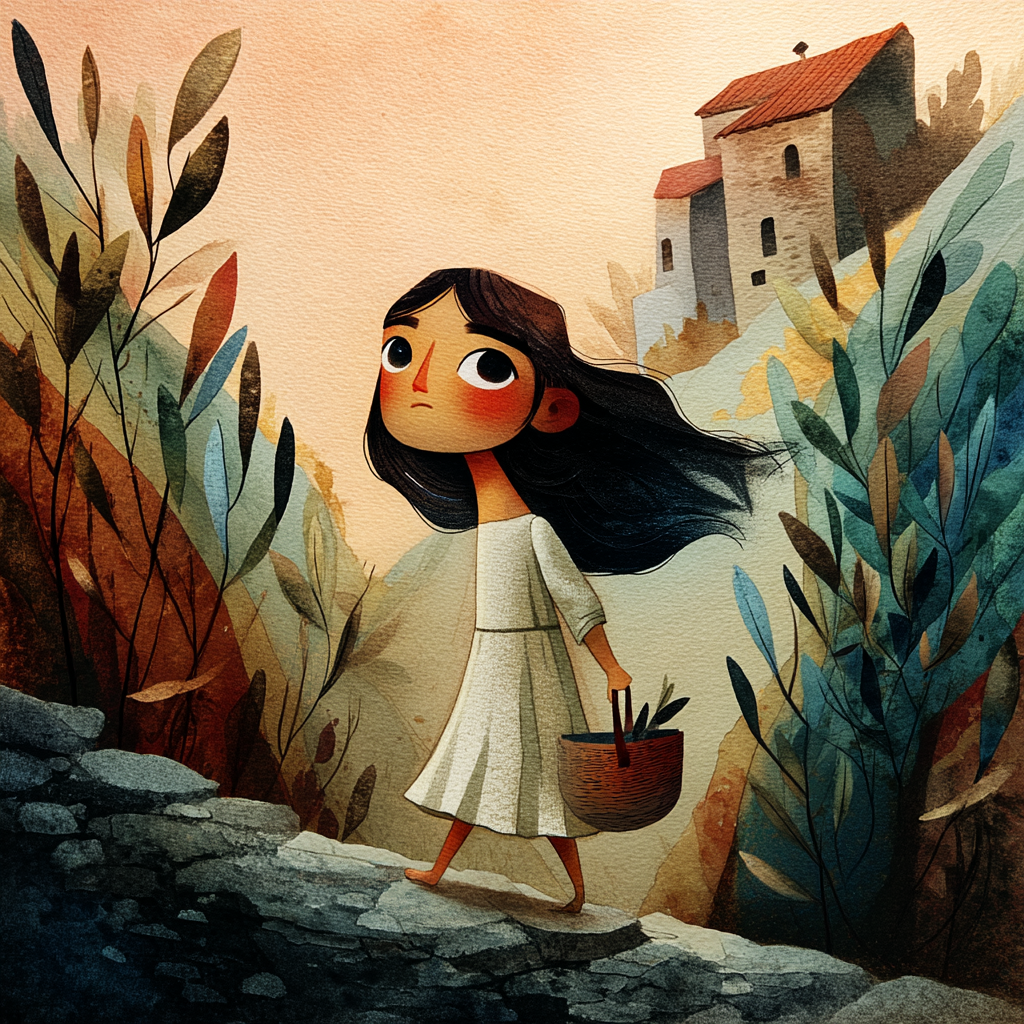
In the village outside Kalamata, the mornings began with the sound of a tin bucket bumping against stone. The air was cold, even when the sky turned pink, and Yiayia Maria felt the handle bite into her palm as she walked with her mother, Eleni, to the old village well. Yiayia Maria is not with us anymore. But listen now.
The path to the well was longer in winter. Stones pressed up through the dirt, and sometimes her feet slipped. Yiayia Maria tried not to spill a single drop. Her mother walked ahead, strong and silent. Behind them, the house waited — small, with smoke curling from the chimney, and her grandmother always sitting by the stove in her thick shawl. When Yiayia Maria got home, her hands red from the cold, her mother would nod to the dough bowl on the table.
"Ready?" Eleni would say.
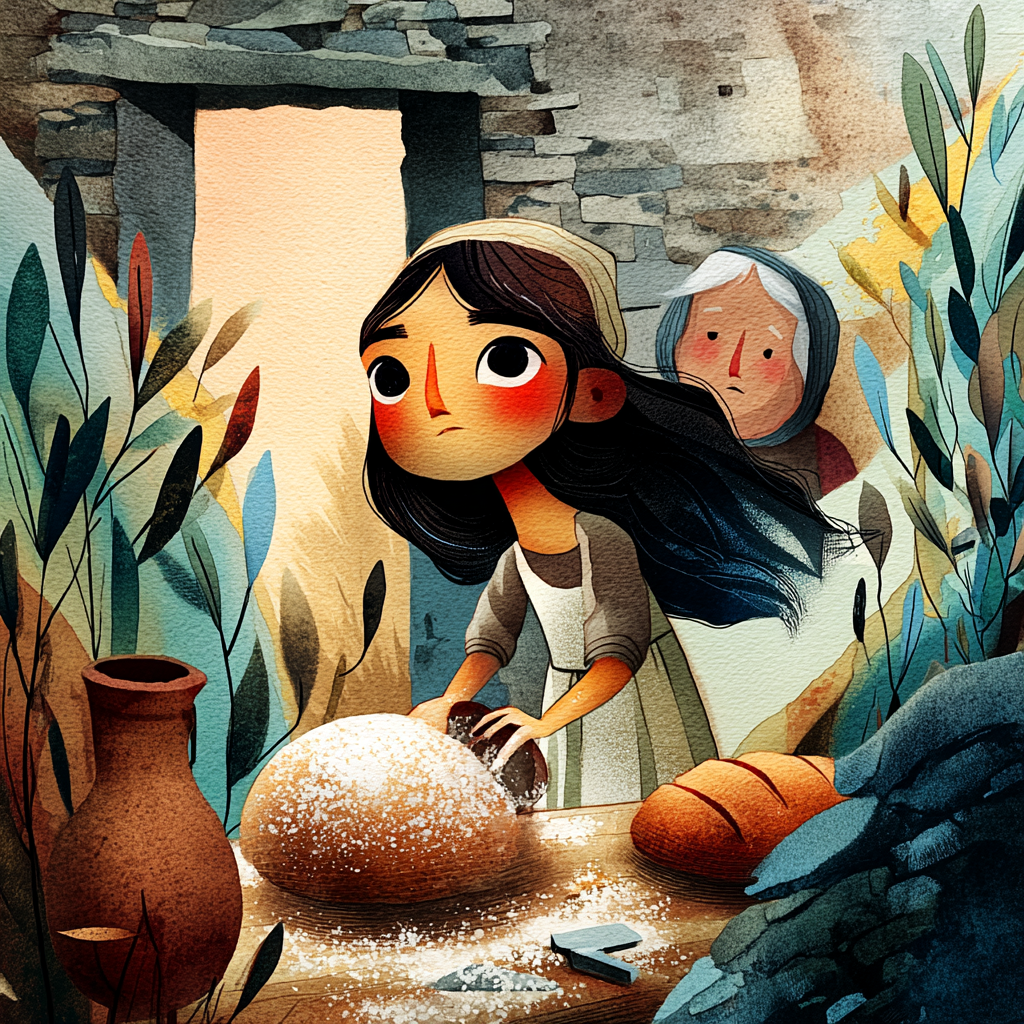
Yiayia Maria nodded, rubbing her palms together to warm them. She helped knead the dough, pushing and folding beside her mother, not saying much. Bread was precious, especially in the years when there was not enough.
Yiayia Maria remembered one winter when her mother divided a single piece of bread into tiny, careful pieces — one for her, one for her brother, one for her grandmother, and nothing left for herself. No one spoke at the table that night. The room was so quiet that Yiayia Maria could hear her own heartbeat.
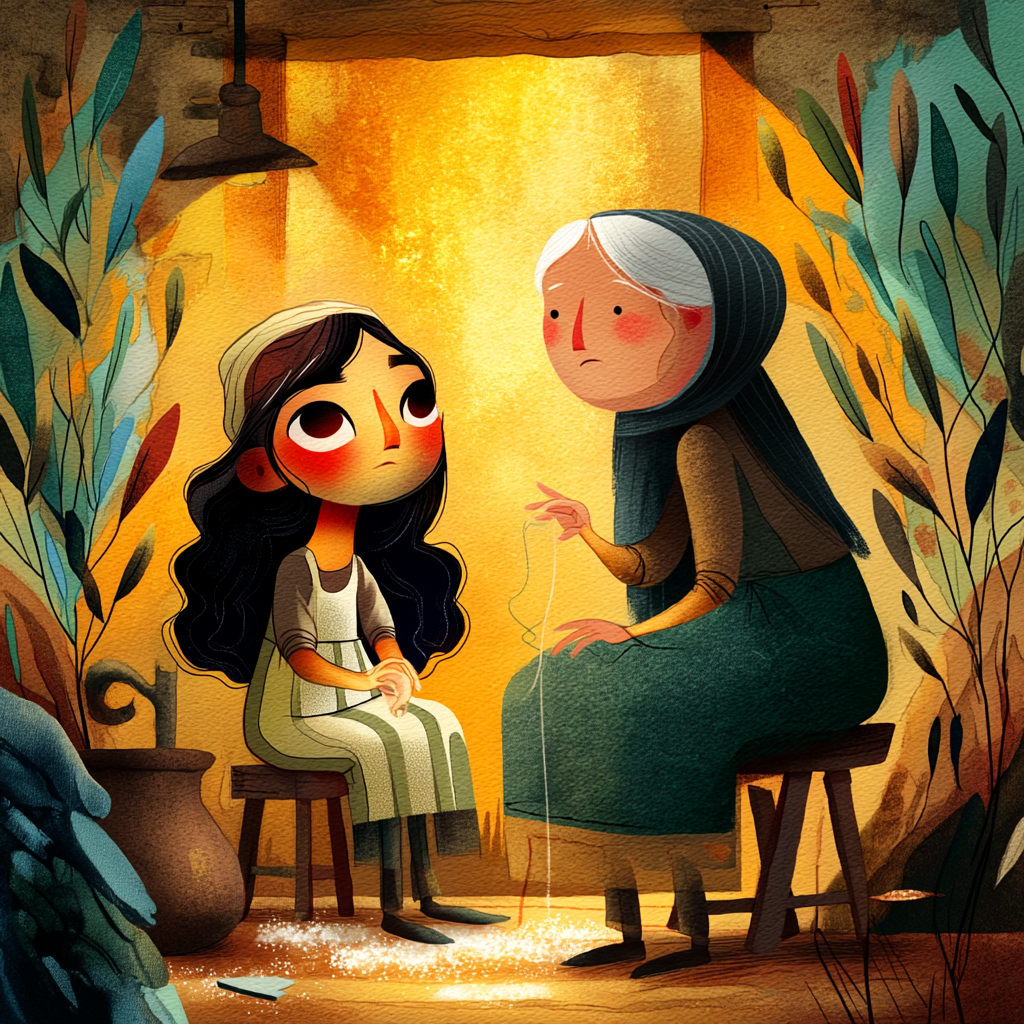
After chores, Yiayia Maria sat by her mother in the yellow lamplight, watching the needle flash in and out of fabric. The house was kept in perfect order. "Keep your hands busy," her grandmother would remind her from her chair. "No one sits idle here."
Sometimes Yiayia Maria tried to sneak a moment of rest. Her mother would look up and say, "There is always more to do." Yiayia Maria would sigh and pick up the broom or the water bucket again. The village felt so big when she was small — fields stretching out, voices carrying over stone walls, the old women telling stories as they spun wool. Yiayia Maria listened, learning to do her work without complaint. And every night, she curled up under the heavy blanket, her hands aching, but proud she had kept up with the women of her house.
But that was still many years before she built her own home, far from the village and the fields.
Later, when she had her own family, Yiayia Maria brought those habits with her to Athens. There, the mornings began even earlier. The city was quiet, the sky barely light, but Yiayia was already moving. Today, like every day, she woke before everyone else. She moved from one room to the next, putting things in their places, making sure nothing was out of order.
When the kitchen was ready, she began to prepare breakfast. Dimitris sat at the table, waiting for her to finish. She set out bread, cheese, and olives, making sure there was enough for everyone. Only then, when every plate was full, did she turn to her husband.
"Are you ready?" she would ask, her voice steady.
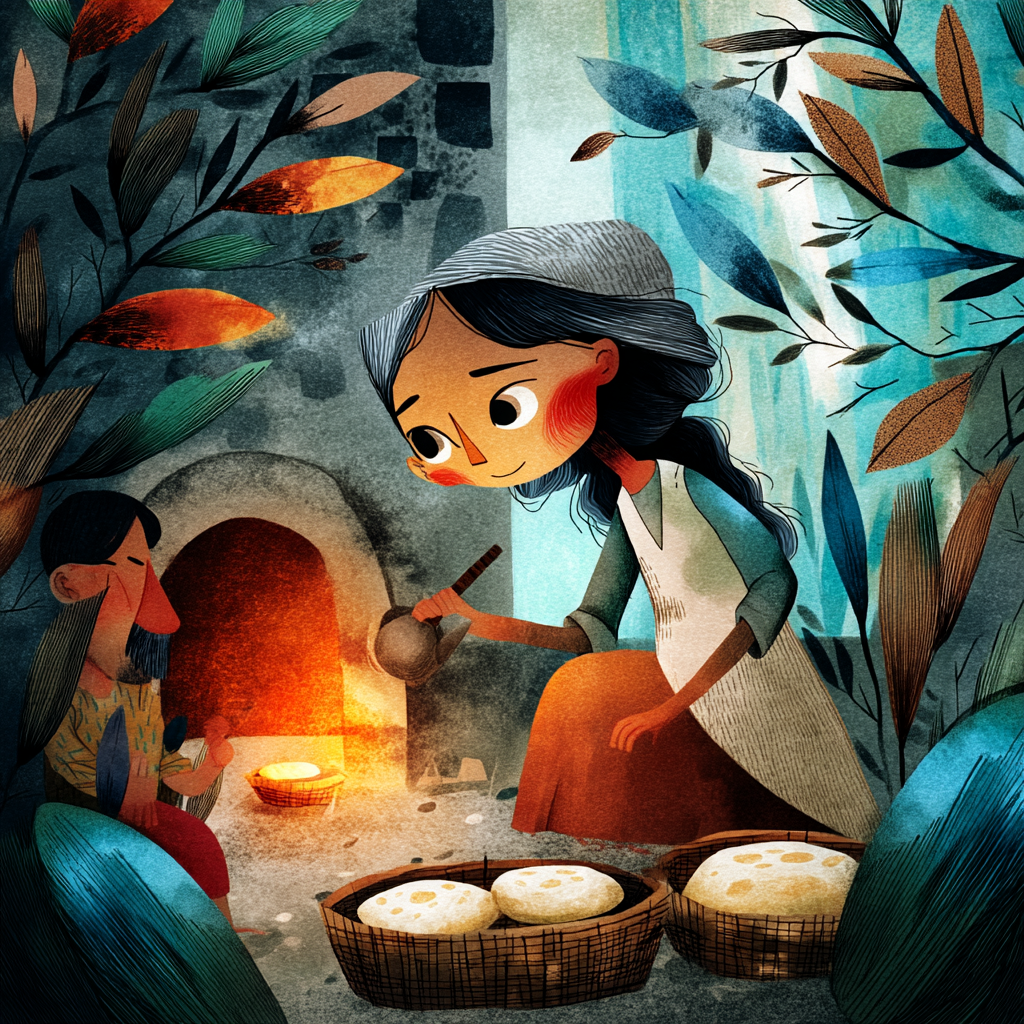
He nodded, and together they left for the bakery. The shop was small, tucked into a street corner, but inside it was warm and smelled of rising dough. Yiayia worked quickly, her hands shaping loaves, dusting flour, sliding trays into the oven. The heat chased away the last bit of morning chill. Sometimes Dimitris would hum as he swept the floor, and Yiayia would look up and almost smile.
Customers came in, one after another, and Yiayia greeted them with a nod. She never spoke more than needed, but her hands always found the biggest loaf for the hungriest child, or tucked a sweet roll into a neighbour's bag. She kept a basket under the counter — old bread, leftover bits, scraps she carefully saved and wrapped.
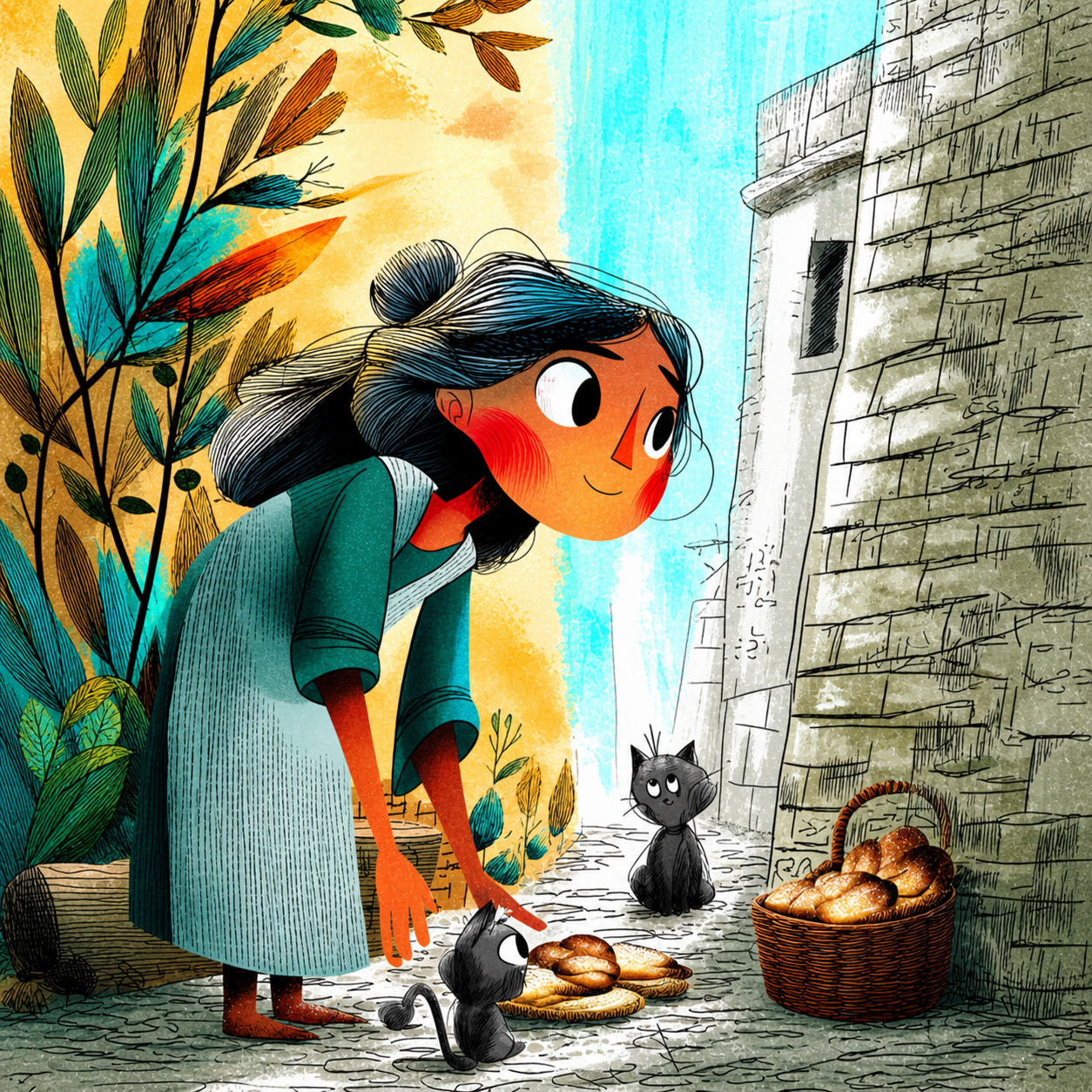
"Is this for the cats?" Dimitris asked one morning, watching her set the basket aside.
"For the cats," Yiayia said. "They wait."
After the rush, when the shop was quiet, Yiayia would step outside to the alley. The street cats waited, silent and patient. Some days it rained, some days the wind blew dust into her eyes, but Yiayia never missed a week. She scattered bread and watched the cats eat until every crumb was gone.
"Come inside, you'll catch cold," Dimitris called.
Yiayia wiped her hands on her apron. "They need to eat too," she said.
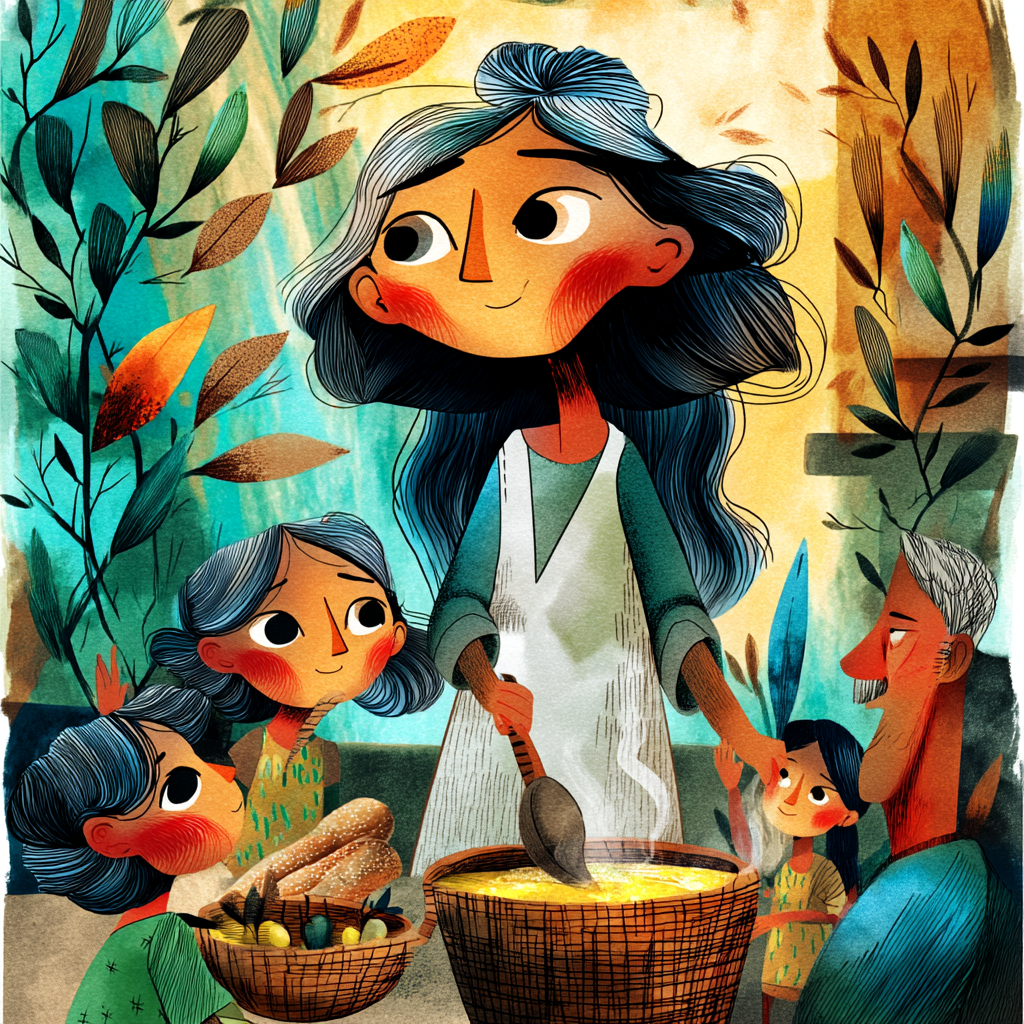
She never sat down to eat until every plate in the house was filled. Even when her children urged her, "Sit, Mama, it's ready," she would wave a hand and say, "Wait," still serving, making sure every spoonful was counted. Only when all were settled did she take her place.
That was how her days moved — one task finished, another begun. The city outside hurried, but inside the bakery, time moved at Yiayia Maria's pace.
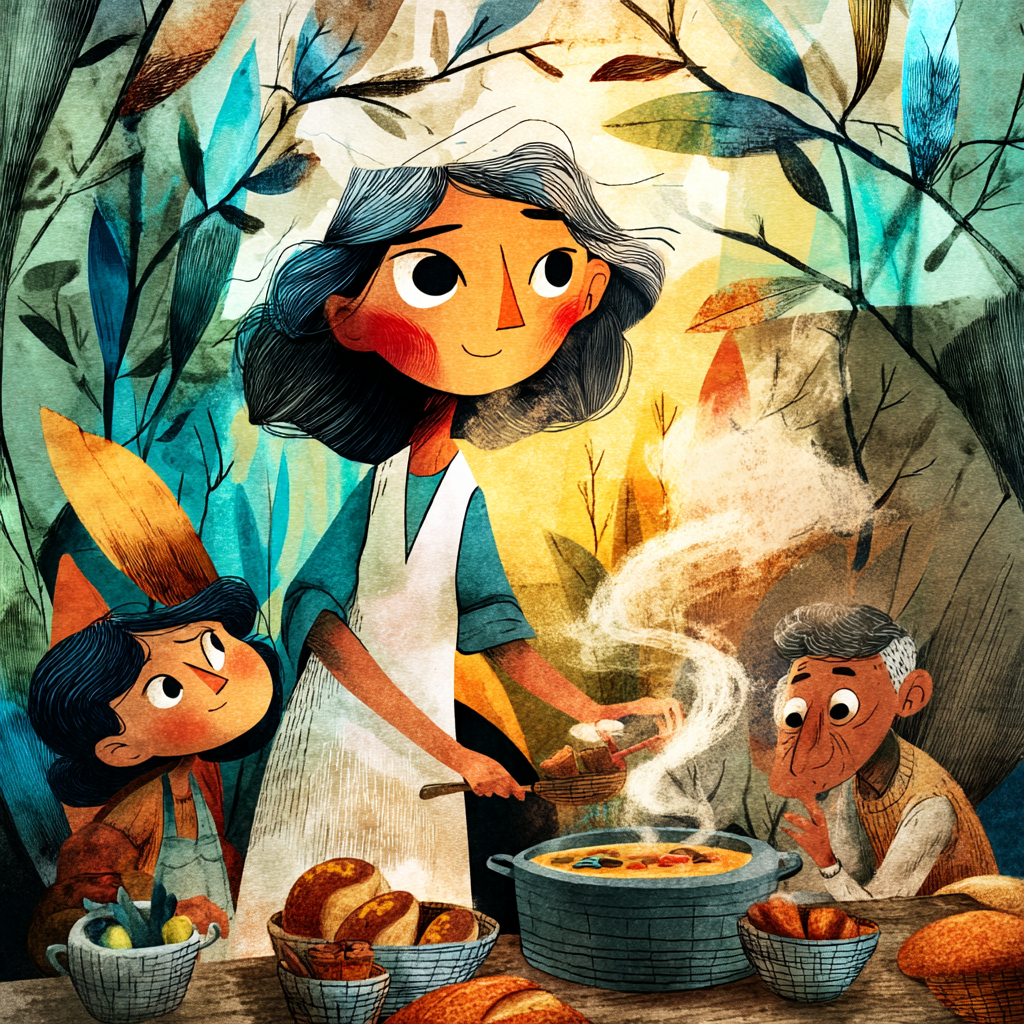
But there were days when the world did not move so gently. There were days when trouble came to the door, and Yiayia Maria met it with quiet hands and no words.
One winter, the bakery's oven broke just before dawn. The dough was ready, but the fire would not catch. Dimitris paced in the kitchen, rubbing his forehead.
"What do we do?" he asked, voice low.
Yiayia looked at the cold oven. She picked up a match and tried again. Nothing. She tried a second time, then a third. The room was silent except for the sound of her breath.
"We wait," she said. "And we try again."
"Everything comes from patience."
Dimitris wanted to shout, but he saw the way Yiayia's shoulders stayed steady. She placed a hand on his arm. He sat down, letting her words settle over him like a warm coat. Yiayia opened the oven door, set kindling in carefully, and struck another match. This time, the flame caught. She did not cheer. She only nodded and began sliding the pans inside.
Later, after a long morning, a neighbour came to the bakery, out of breath. "My boy is sick," she said. "We have no bread left."
Yiayia did not hesitate. She took the last loaf from the shelf and placed it in the woman's hands. That night, when the family gathered at the table, there was a little less to go around. Yiayia still gave the biggest piece to her youngest child. "Eat," she said. "I'm not hungry."
But her children watched her. They knew the shape of sacrifice, even if the word was never spoken. In that house, when things were hard, no one raised their voice. Yiayia worked a little longer. The room grew quieter, as if everyone was listening for her next word.
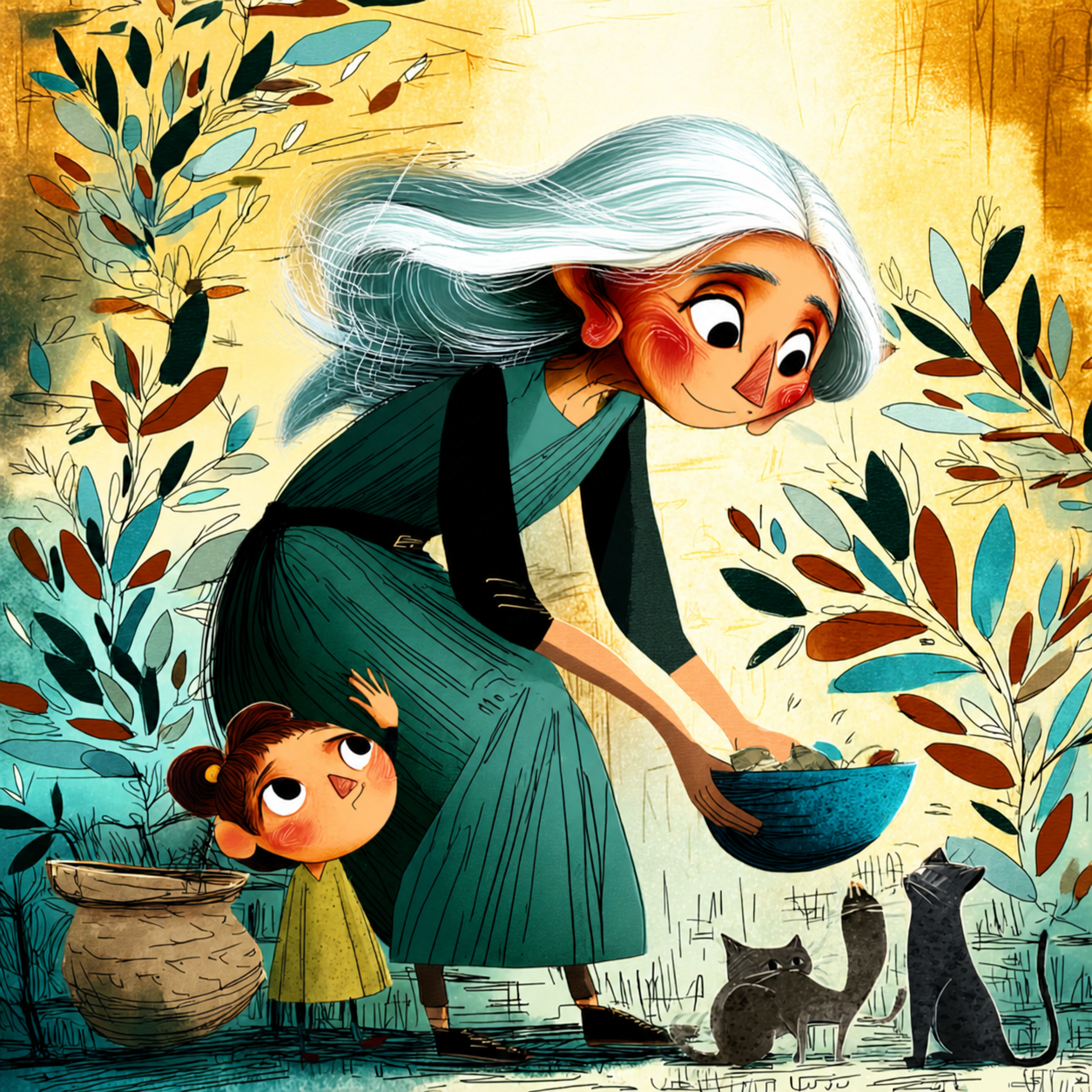
Years passed. The bakery changed hands, the city grew busier, but Yiayia's way never changed.
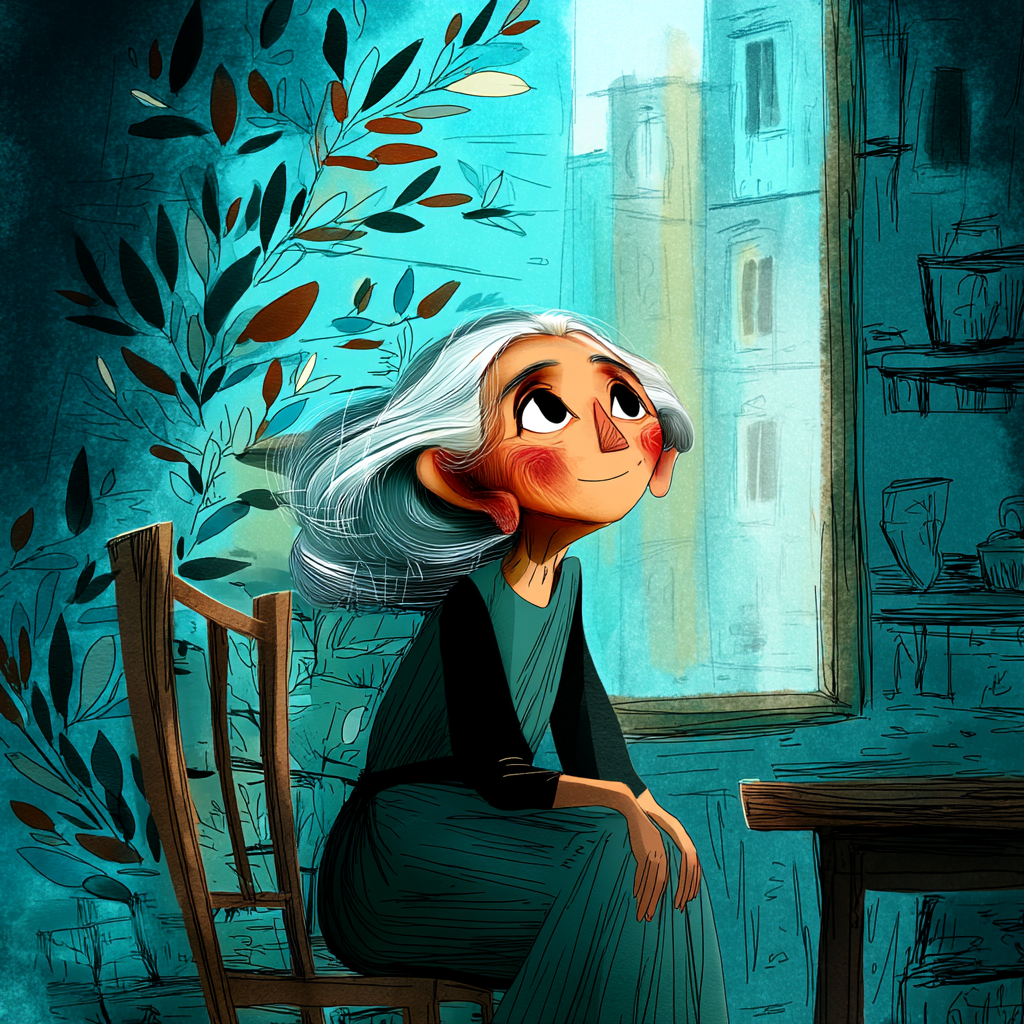
And then, after Dimitris was gone, the house felt different. The rooms were bigger, somehow. There were new voices — children, grandchildren, even great-grandchildren coming and going. Yiayia still woke before dawn. She still made sure every plate was full before she sat down. But in the evenings, after the noise faded and the kitchen was clean, there was a stillness that wrapped around her like an old shawl.
Elpida, her daughter, sometimes came in early and found her sitting at the table, hands folded, looking out the window.
"Why don't you rest, Mama?" Elpida would ask.
"There is always more to do," Yiayia answered, her voice gentle.
Now, when the family gathers, someone always stands to serve, making sure every plate is filled before taking their own. Nikos, her grandson, walks past the old bakery corner and remembers Yiayia feeding the street cats, rain or shine. Georgios, her son, keeps the house in order the way she did, moving quietly, never raising his voice. Apostolos, too, always sets aside a piece of food for someone else.
Sometimes, when patience is thin and tempers grow short, there is a pause. Someone looks up and says the words Yiayia always said, soft but certain:
"Everything comes from patience."
— Yiayia Maria